 "CONVERSION CODES"
Skip to content


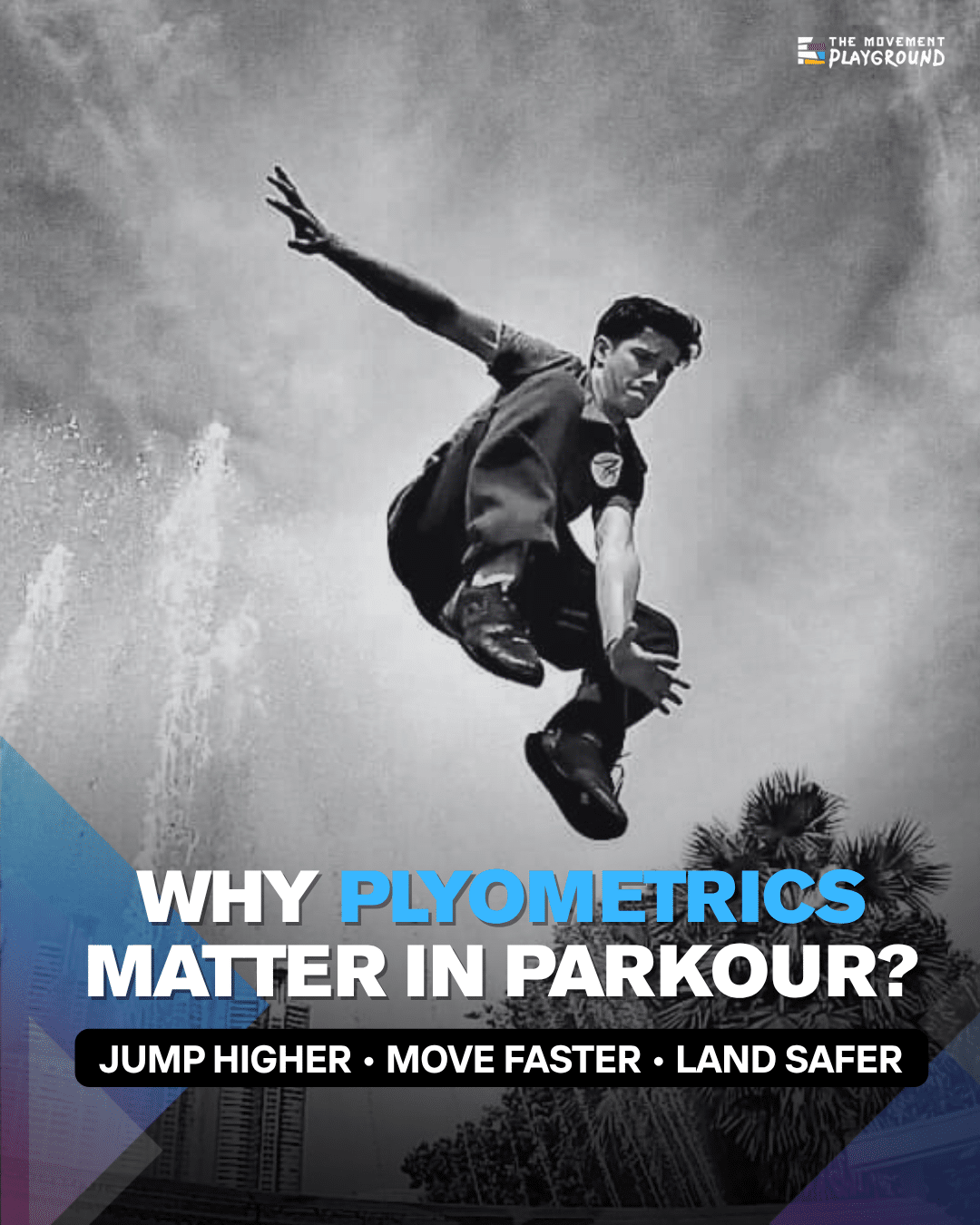
Have you ever seen parkour athletes jumping incredibly high or launching themselves to grab bars as if flying through the air? This is because they have training techniques that can explosively generate power for use in the field. This type of training can be applied to parkour, as well as improve muscle flexibility and better control movement timing. Today, MPG will introduce everyone to this training method.
What is Plyometrics?
Plyometrics training is jump training that helps make the body more flexible and strengthen your muscles. Think of it simply as our body becoming like a rubber band that can stretch and snap back forcefully, releasing powerful energy. The human body works the same way – we can release this type of power in parkour.
Why is Plyometrics Important for Parkour Training?
Once we’ve trained in Plyometrics, what improves is the ability to make ground contact or land much faster, have power to propel forward, and respond more quickly than before.

1. Increase Strength and Jumping Power
Because parkour requires extensive use of leg power for jumping, whether we’re propelling upward or sideways past obstacles, leg power is essential. Plyo training allows muscles to release more power in a short period of time. Once we’ve completed a full training cycle, it helps muscles develop memory so we can move our bodies more easily, and may even enable us to propel ourselves farther than before.
2. Improve Agility and Timing
Parkour training often involves solving problems on the spot and requires considerable decision-making. What follows is observing surroundings and adapting in that moment, which requires greater agility. Plyo training helps us move our bodies more easily, or flowing smoothly, whether it’s jumping, landing, or propelling to continuous transitions.
3. Prevent Injuries
Our important aspect of parkour training is injury prevention. Every time we jump and land, it creates an impact on joints, muscles, and internal tendons. If we haven’t trained properly, this impact can result in pain or stiffnedd. Plyo training isn’t just about strengthening muscles, but also reinforces our tendons and bones. The more we can control our body’s force, the more our body can absorb impact. Research shows that Plyo training also helps strengthen the musculoskeletal system. Additionally, it can extend athletic longevity.
4. Better Landing
Parkour isn’t just about jumping – we must also consider landing. Because besides absorbing impact, it also helps reduce injuries that may occur. Whether we need to vault over various boxes or lache to another bar before landing, these are all important rhythm transitions. Plyo training helps with better body control and more precise landings.

Important Plyometric Exercises for Parkour
After learning about the benefits of Plyo training, let’s look at exercises that can help increase our skills even more.
- Box Jumps: Training to absorb force and use reactive force to spring back up
- Broad Jumps: Jumping with distance estimation and power release
- Depth Jumps: Training to touch the ground with minimal time to build muscle strength

Using Plyometrics in Parkour Movements
For those who still can’t visualise how much Plyometrics can enhance parkour movements, let’s look at various techniques:
- Precision Jump: Better control of jumping force when landing
- Wall Run and Wall Climb: Release power to propel up walls
- Vault: Leap over boxes

Conclusion: Why Plyometrics Training is Important for Parkour
Strong parkour comes from proper Plyometrics training. Whether it’s managing your hidden power, training agility, or training landings for muscle strength, Plyometrics training can be considered a fundamental foundation of this sport. The rest depends on regular practice so the body develops muscle memory and advances to the next level. For anyone interested in training parkour with us, complete with a super friendly community, you can contact The Movement Playground and come unleash your power together.